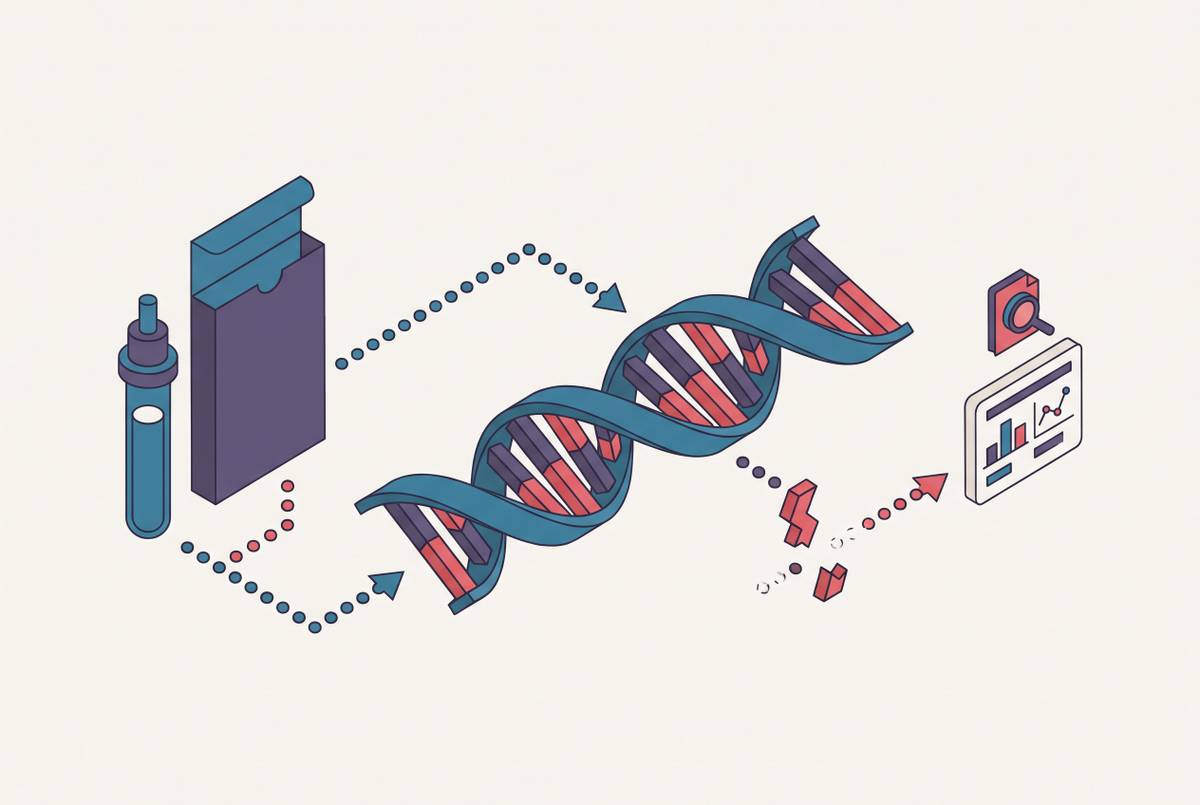
Germline vs Somatic Variants in Preventive Genomic Screening
Understanding which variants are inherited versus acquired shapes every screening decision.
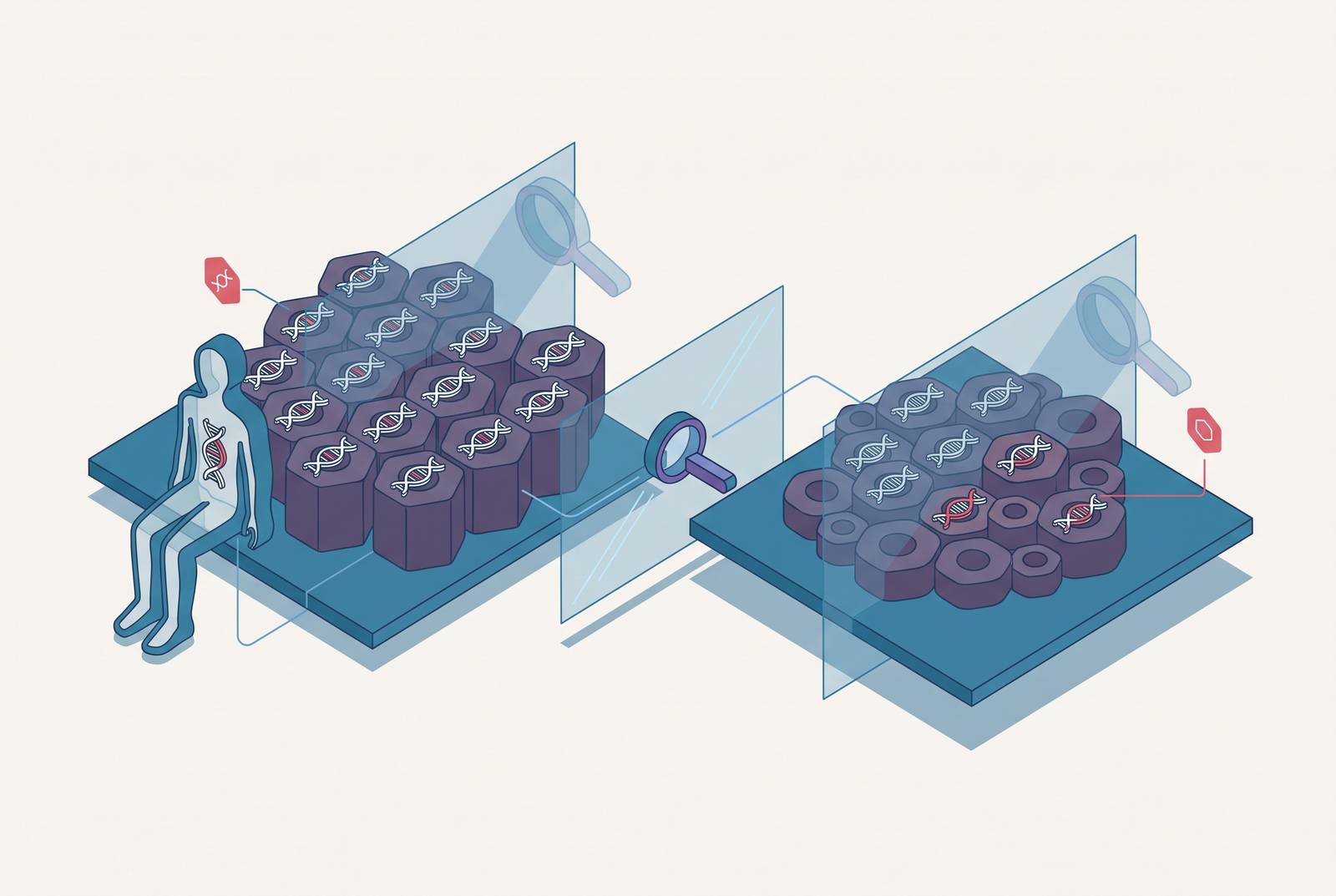
Somatic and germline variants aren't two flavors of the same test. They're two different biological facts, drawn from two different tissue sources, answering two different clinical questions, and most of the confusion around genomic screening traces back to that single distinction. A germline variant sits in every cell of the body because a patient was born with it, inherited from a parent, and it passes to that patient's children with predictable odds. A somatic variant shows up in one tissue, usually a tumor, sometime during a person's life, and it dies with the cells that carry it. Dr. Barbara Norquist of the University of Washington frames germline testing as a search for inherited mutations present since birth. The harder part is that somatic mutations evolve over time with disease progression and treatment, something a germline variant simply cannot do, because it doesn't change.
That difference decides which tube of blood or scrap of tissue lands on a lab bench, which family members get a phone call, and which drug gets picked. Get it wrong, or skip it, and the consequences don't stay small.
How often each variant type appears in the population, and what that means for screening at scale
Germline cancer susceptibility variants turn up more often than most people assume. A 2025 preprint drawing on NIH's All of Us program, with whole genome sequencing across a large population, found pathogenic or likely pathogenic variants in cancer susceptibility genes in 5.05% of the general population, a figure that lines up almost exactly with the 5% threshold NCCN already uses to recommend BRCA1/2 testing.
The burden shifts hard once you move from the general population to specific diseases. An estimated 10% of people with a myeloid malignancy carry a germline susceptibility variant, high enough that some clinicians argue germline workup should be routine rather than exceptional in that setting. In metastatic prostate cancer, work by Pritchard and colleagues cited at ESMO 2025 put germline mutations at about 12% of metastatic cases and 6% of localized high-risk cases. Somatic mutation rates in the same disease run higher at every stage: 23% in metastatic castration-resistant prostate cancer, 19% in localized disease. Somatic burden beats germline burden consistently, and that gap is exactly why somatic testing gets ordered first in prostate cancer, not out of habit but because it's more likely to return an actionable result sooner.
Penetrance varies wildly by cancer type too. Germline variants show up in 100% of medullary thyroid carcinoma cases and 40% of retinoblastoma cases. Treating "germline risk" as a single number that travels across diagnoses is the mistake this spread rules out.
None of this settles whether population-scale germline screening is workable, and it shouldn't be treated as though it does. Rolling out screening at that scale would require more cost-effectiveness work and a hard look at whether the healthcare system can absorb the volume. Prevalence data tells you the size of the problem. It doesn't tell you whether anyone's built the plumbing to handle it, and right now, nobody has.
What somatic variants are used for in preventive and early-detection contexts, and where that use currently stops
Somatic variant interpretation asks a narrower question than germline testing does. It isn't asking whether a variant is pathogenic. It's asking whether it predicts drug sensitivity, resistance, or toxicity, whether it qualifies someone for a trial, whether it changes prognosis. That framing keeps somatic testing tethered to treatment decisions in a way germline testing isn't, and treating the two as interchangeable is where a lot of the field's confusion starts.
Liquid biopsy is where somatic testing has made its biggest push toward prevention. It works by analyzing circulating tumor DNA, along with methylation patterns, hydroxymethylation, copy number variation, and microRNAs, in blood or urine, and in some cases it flags tumor activity earlier than conventional imaging. Circulating tumor DNA can pick up single-nucleotide variants, insertions and deletions, copy-number changes, and structural rearrangements, with the strongest use cases built around driver genes like EGFR, KRAS, BRAF, ALK, and TP53.
But liquid biopsy's reliability in treated cancer patients doesn't transfer to people who aren't known to have cancer at all, and this is exactly where the marketing around early detection gets ahead of the science. Someone without a diagnosed tumor has a much lower tumor fraction circulating in their blood, and no one knows the genotype of a tumor that hasn't been found yet. Those are the exact conditions that make ctDNA hard to trust for early detection, even where it works well for monitoring a known cancer.
The gap shows up concretely with BRCA1/2 carriers. Despite how much clinical weight those genes carry, no dedicated cell-free DNA early-detection studies exist for hereditary breast and ovarian cancer carriers. Multi-cancer early detection tests, the ones marketed to catch cancer before symptoms appear, haven't established clinical utility for BRCA1/2 carriers and sit outside standard guideline-based management for that group. Recommending one of those tests to a known carrier as a substitute for MRI or mammography surveillance isn't a judgment call. It's a mistake the evidence doesn't support.
Where somatic testing does feed prevention is more indirect, and more valuable for it. Finding MSI-H or dMMR status in a tumor can trigger a genetic counseling referral for Lynch syndrome, which opens the door to germline testing for the patient and, from there, the patient's family. That's a somatic finding doing germline work, but only because someone acted on it. Somatic testing's preventive contribution today runs almost entirely through that relay: it surfaces a signal, and the signal only becomes heritable risk information once germline testing confirms it.
Clonal hematopoiesis of indeterminate potential: when somatic variants complicate rather than clarify preventive screening
Clonal hematopoiesis of indeterminate potential, or CHIP, happens when blood-forming cells pick up somatic mutations and expand into a clone, defined clinically by a variant allele fraction of at least 2%. It's common. Roughly 10% to 20% of people over 70 carry a clonal expansion that meets CHIP criteria, meaning a large slice of anyone getting routine screening or a liquid biopsy is carrying this somatic noise without any cancer diagnosis attached to it.
Most of those people never develop a blood cancer from it. Overall progression to overt malignancy runs 0.5% to 1% per year, though that aggregate figure masks meaningful variation across individual cases. Treating CHIP as a single uniform signal, the way a lot of screening protocols still do, misses that variation entirely.
The practical headache shows up in liquid biopsy interpretation. DNA shed from hematopoietic stem cells carrying CHIP variants enters the bloodstream right alongside actual circulating tumor DNA, and cell-free DNA analysis doesn't automatically sort one from the other. That's noise sitting on top of the signal a clinician is trying to read, a problem germline testing simply doesn't have, since a germline result doesn't drift or accumulate over a lifetime.
Emerging research continues to push CHIP further from nuisance and closer to genuine risk factor, with associations to hematologic malignancy risk that extend beyond what clone size alone would predict. So a somatic variant on a liquid biopsy panel might reflect a tumor, might reflect CHIP, might reflect both at once, and the right next step differs depending on which it is. Filtering a CHIP finding out as background noise, rather than tracking it as its own risk factor, is the wrong call, and the 2025 lymphoma data is exactly why.
How a somatic tumor result becomes the gateway to germline testing, and why follow-through is poor
Comprehensive tumor profiling is increasingly the first place a germline variant gets spotted, flipping the traditional order where germline testing came first and tumor testing followed. At Princess Margaret Cancer Centre, a germline Molecular Tumor Board reviewed 243 tumor profiles and flagged at least one potentially germline variant in 83 of them, or 34.2%. Among those 83 cases, 56.6% already met standard germline testing criteria on their own, independent of what the tumor profile showed.
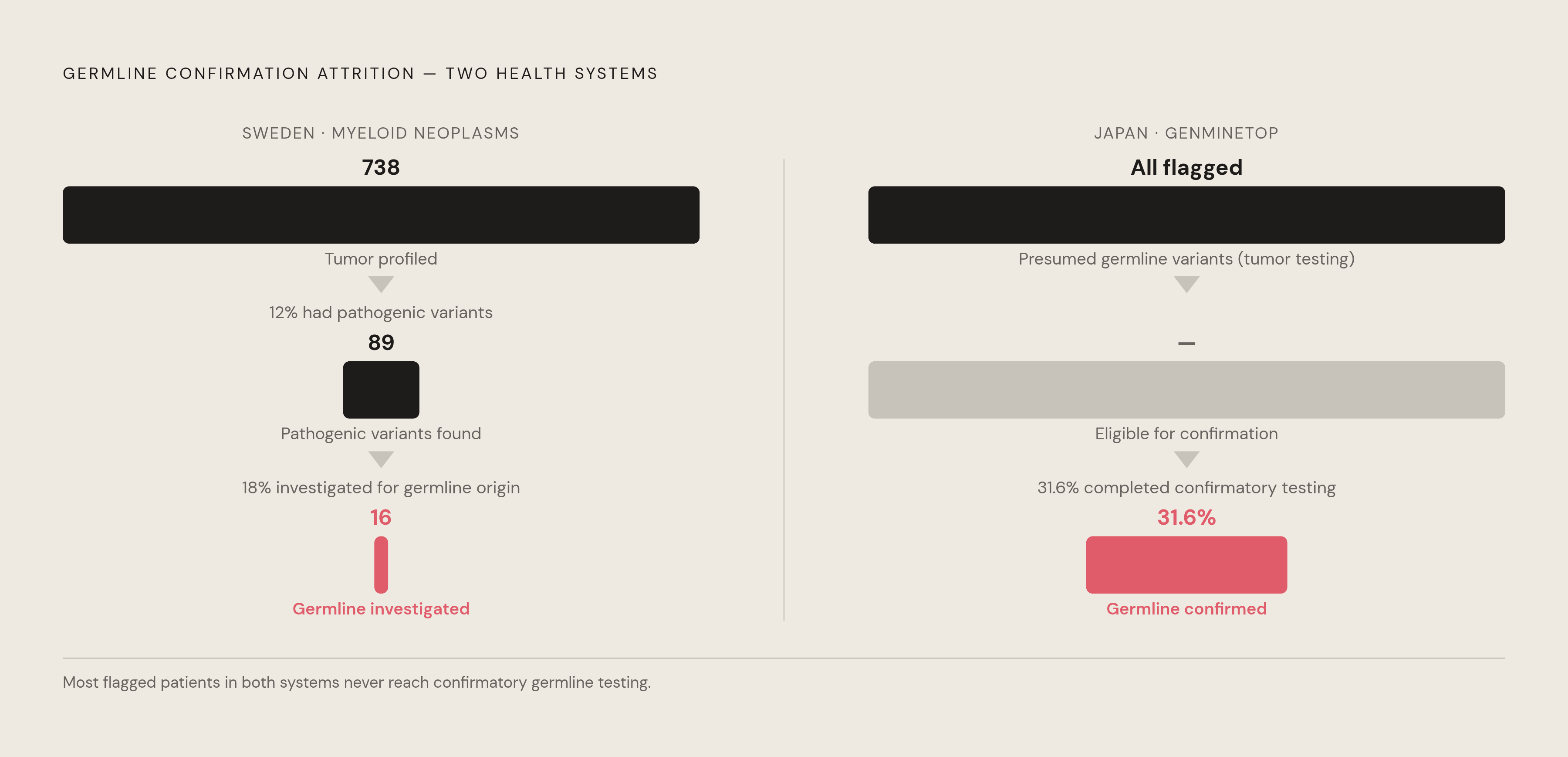
Flagging a variant is not the same as confirming it, and that's exactly where the pathway breaks down. A Swedish study of 738 patients with myeloid neoplasms found pathogenic or likely pathogenic variants in 12% of cases, but potential germline origin was investigated in only 18% of those patients. In Japan, nationwide data from the GenMineTOP program found confirmatory germline testing happened in just 31.6% of patients with a presumed germline pathogenic variant picked up through tumor-only testing. Two health systems, two continents, and the same failure showing up at roughly the same rate: patients get flagged, and most of them never get confirmed.
Evan Y. Yu, MD, of Fred Hutchinson Cancer Center and co-chair of ASCO's expert panel on the topic, said plainly in January 2025 that testing for those mutations "is not commonly done, especially in the community setting." That's not a minor inefficiency. Every patient whose somatic-flagged germline variant never gets confirmed is a patient whose relatives never get offered cascade testing, and the whole preventive payoff of the pathway rides on that one confirmatory step. Right now, it gets skipped more often than it gets taken, which means the difference between a family knowing its risk and not comes down to a step that most labs simply aren't completing.
Somatic profiling isn't just occasionally revealing germline risk that clinical history would have missed anyway. It's actively expanding the population of patients who should be getting germline follow-up in the first place, which means the confirmation gap above is only getting wider as more tumor sequencing gets ordered.
What current guidelines say about ordering both tests, with metastatic prostate cancer as the clearest worked example
ASCO's guideline, published in January 2025 in the Journal of Clinical Oncology, states that patients with metastatic prostate cancer should get both germline and somatic DNA sequencing through panel-based assays, not one or the other. Germline results carry screening implications for other cancers and cascade testing implications for the patient's family, neither of which a somatic result can offer. The guideline also addresses retesting scenarios and tissue selection considerations for patients at various stages of disease.
NCCN takes a pragmatic view on access: where germline testing is critical to a treatment decision but full risk assessment and genetic counseling aren't feasible in time, the treating clinician can order germline testing directly rather than waiting on a referral. For ovarian cancer specifically, NCCN calls for both germline and somatic testing in patients diagnosed with ovarian, fallopian tube, or primary peritoneal cancer.
The research literature is blunt about why one test alone falls short: germline-only testing misses a substantial share of BRCA1/2 alterations and most cases of microsatellite instability, while tumor testing on its own can miss pathogenic germline variants entirely. Ordering just one of these tests to save time or cost isn't a shortcut. It's choosing which category of patient to fail.
The stakes behind that recommendation show up clearly in the PROfound phase 3 trial, which evaluated a PARP inhibitor in mCRPC patients with BRCA1/2 or ATM mutations. Median overall survival ran 19.1 months on olaparib versus 14.7 months on the comparator arm (hazard ratio 0.69), and once the analysis adjusted for patients who crossed over to olaparib, the hazard ratio dropped to 0.42. That's a drug picked correctly because both tests ran, not a marginal benefit dressed up to look decisive.
Practice hasn't caught up to guidance. A 2022 study by Leith and colleagues, covering 1,913 mCRPC patients across the US, Europe, and Japan, found HRR mutation testing happened in only 18.1% of cases, with a 33.7% positivity rate among those who were tested. Of the 347 patients who did get tested, 91.6% were tested for BRCA and only 47.3% for ATM, so even the testing that happens skews narrow within a panel that guidelines already recommend running in full.
Once a BRCA2 mutation is confirmed, the preventive implications spread well beyond the original cancer. Lifetime risk runs 55% to 69% for female breast cancer, 13% to 29% for ovarian cancer, and 19% to 61% for prostate cancer in men, with elevated pancreatic cancer risk too. Each of those triggers its own surveillance protocol. The germline result isn't just informing a drug choice, it's opening a roadmap across multiple organ systems and, by extension, multiple relatives who never asked to be tested but now need to be.
Variants of uncertain significance: the classification problem that sits between both test types and stalls preventive action
The American College of Medical Genetics and Genomics uses a 28-criteria framework to sort germline variants into five buckets: pathogenic, likely pathogenic, benign, likely benign, or variant of uncertain significance. That last category, VUS, is where clinical decision-making stalls most often. Only a minority of VUS results eventually turn out to be pathogenic on reassessment, but the reassessment itself rarely happens on a useful timeline, leaving patients and clinicians stuck waiting on an answer that may not come for years.
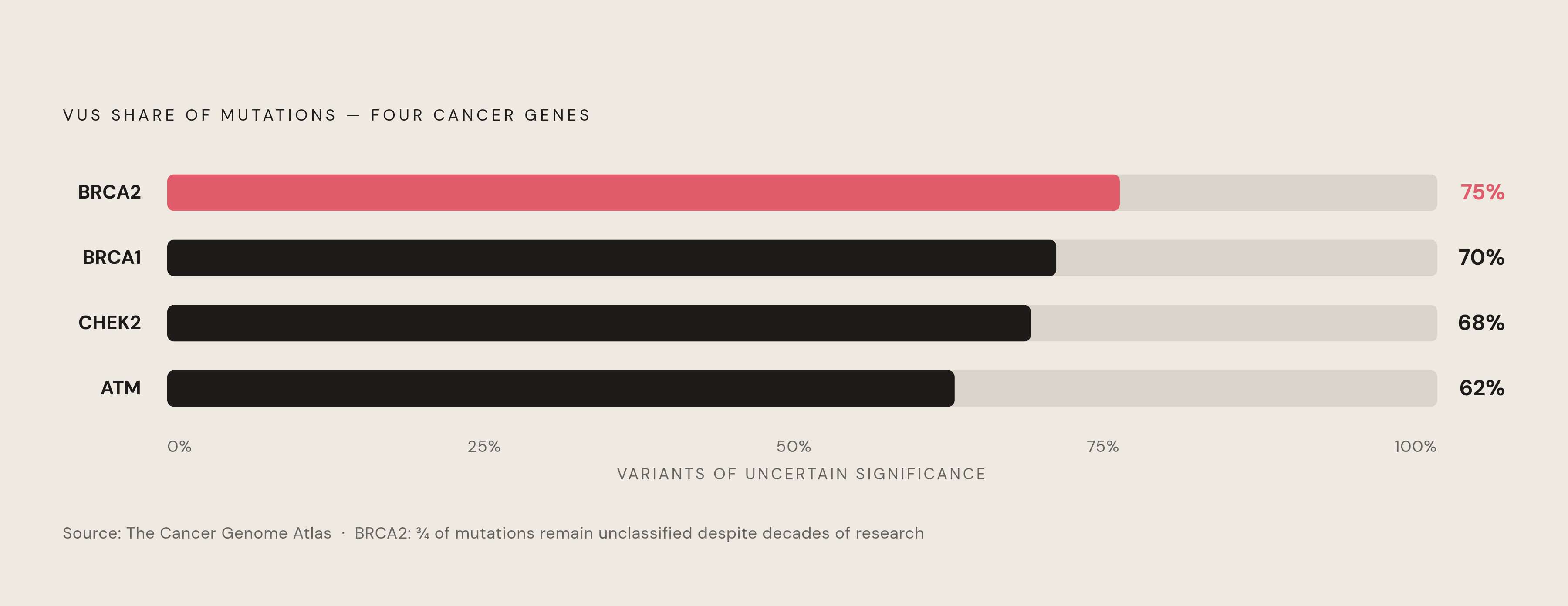
The scale of the problem in major cancer genes is startling. Data from the Cancer Genome Atlas shows 62% of ATM mutations currently sit classified as VUS, along with 70% of BRCA1 mutations, 75% of BRCA2 mutations, and 68% of CHEK2 mutations. Those are genes with direct bearing on breast, ovarian, and prostate cancer risk, and roughly two-thirds to three-quarters of the mutations found in them carry no clear verdict at all.
The clinical rule here is unambiguous even where the data isn't: decisions like risk-reducing surgery, surveillance intensity, or PARP inhibitor selection should rest on pathogenic or likely pathogenic findings, never on a VUS. When a result comes back uncertain, risk estimation falls back on personal and family history instead, full stop. A case from a 2025 UNMC survivorship presentation makes the point concretely: a patient with metastatic prostate cancer had a germline panel return CHEK2 p.D438N as a VUS, and a second germline lab classified the same variant as uncertain as well. No management decision was made on that basis. The patient's PARP inhibitor selection was driven instead by a somatic ATM mutation, not the unresolved germline finding, which is exactly how it should work.
Reclassification is its own quiet failure point, maybe the quietest one in this whole pathway. A 2025 study using the Brotman Baty Institute's Clinical Variant Database, drawing on thousands of patients from 2015 through 2024, found that the systems meant to communicate variant reclassifications back to ClinVar, to patients, and to providers are inadequate. A patient told years ago that a variant was uncertain may never learn it's since been reclassified as pathogenic, simply because no reliable channel exists to tell them. The costs aren't abstract: unnecessary treatment, real psychological harm, redundant re-analysis, expense that falls on both patients and the healthcare system. A VUS isn't a neutral placeholder sitting quietly in a file. It's a state that actively produces harm the longer it goes unresolved.
Where AI and machine learning are beginning to reduce variant classification uncertainty, and what they cannot yet do
Machine learning models are starting to chip away at the VUS backlog by predicting the functional consequence of a variant, whether it likely disrupts protein folding, gene expression, or splicing, and using that prediction to re-rank unresolved variants for review instead of leaving them all in an undifferentiated queue. That's a genuine improvement in triage. It is not classification, and treating the two as the same thing is the mistake to watch for as this technology gets marketed.
The distinction matters because the ACMG framework combines multiple independent lines of evidence: population frequency data, computational predictions, functional studies, segregation in families, and clinical observation. A machine learning model can strengthen the computational prediction piece, sometimes meaningfully, but it can't substitute for the functional or family-based evidence the framework also requires. A model flagging a variant as likely disruptive still needs corroborating lab or pedigree data before that variant moves out of VUS status, and that corroborating data is exactly the slow, expensive part of the process automation hasn't touched.
There's also the reclassification communication problem laid out above, and no algorithm addresses it. A better prediction model doesn't help a patient find out that a variant classified as uncertain in 2018 has since been upgraded to pathogenic, if the lab, the clinician, and the patient never reconnect on that result. That bottleneck is procedural and institutional, not computational, and closing it takes the same unglamorous work as any records problem: tracking systems, follow-up protocols, and someone whose job it is to close the loop.
Somatic interpretation faces a parallel but distinct challenge. Because somatic variants shift under treatment pressure, as Dr. Paller noted, a model trained on a single snapshot of tumor genomics risks going stale by the time a patient's disease has evolved past it. The clonal evolution that makes somatic biology clinically important is the same property that makes any static prediction tool age quickly against a moving target.
None of that argues against the technology. It argues for precision about what it actually does. Machine learning is proving useful as a triage layer, sorting the pile of uncertain variants so the limited supply of genetic counselors and molecular pathologists can spend their time where reclassification is most likely to pay off. Pitching it as a full solution to the VUS problem, rather than as the triage layer it actually is, gets the technology backwards: it doesn't replace the multi-source evidence chain that turns a VUS into a pathogenic or benign call, and it does nothing on its own to fix the human systems that let patients fall out of touch with their own results.